Alex Honnold, the Winter Olympics and chocolate dumplings: Why the small stuff makes the story
It’s likely you already know who Alex Honnold is. In January, he climbed up a skyscraper without any safety ropes. Maybe you were one of the six million people who saw it live on Netflix.
It was, without a doubt, very impressive. I saw Free Solo on the big screen in 2018 and consumed all the related climbing films I could find. (If you want some recommendations, check out The Dawn Wall and Valley Uprising).
But was I the only one looking around for the “making of” documentary? Where was the behind-the-scenes stuff?
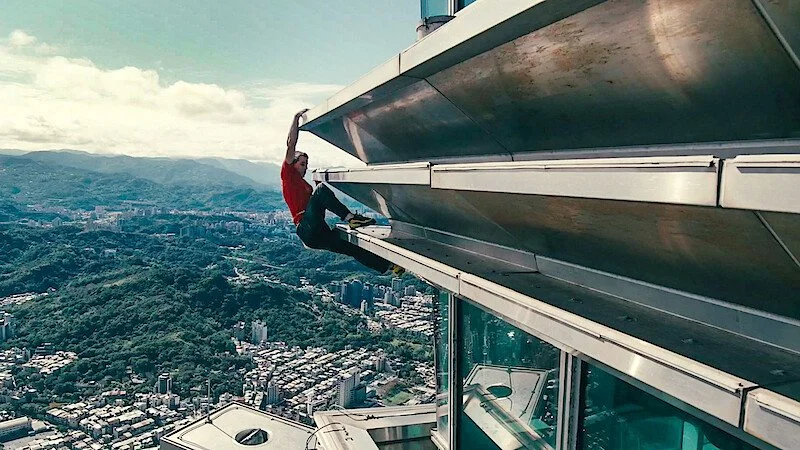
No ropes, no making-of documentary
To me, the bookends of this story weren’t Alex Honnold in a van at the foot of Taipei 101 and him at the top taking a selfie. There was much more to it. I wanted to know:
How did they get all the cameras set up?
What was the security like?
What happened with the crew and all the equipment when the climb was postponed 24 hours?
What did he have for breakfast?
How did he sleep the night before?
Does he always wear the same shoes?
How much powder is in the chalk bag?
Were people in the building told to please keep the noise down and not bang on the windows?
Did he go down the normal lift afterwards?
Did he celebrate or just have a nap?
All these details spell out not just the shiny headline achievement but the small stuff. You can tap open your social media or news app of choice and see people celebrating some sort of great achievement. That stuff’s everywhere, but the details and the process – the authentic little did-you-knows – that’s still valuable.
Likewise, the Winter Olympics. Yes, there were wins and records and fist-pumping, but I’ve already forgotten who got which medal. What I really remember – and the stuff I talked to people about at the time – are the little details and human stories sprinkled between the sport. There was a proposal, a confession of regret, a car park camper van and two kids in a team photo. There was a rapper, a president and a party planned for Vegas. And did you know all the curling stones are made with rock from one teeny uninhabited Scottish island?
Why are these details what we look for and what sticks? They’re not the wins or even the elements that made the team or person win – they’re just there, the oddly human thing floating around the big headline. What makes them the shiny trinkets we gather like a magpie?
First, we remember scenes better than summaries.
When we remember something visual, we store two things: the image and the words that describe it. These bits of information are stored in two separate but connected systems, so they’re more likely to be recalled. Psychologist Allan Pavio called it “dual coding” back in 1968, and it’s also known as the “picture superiority effect”.
Winning a medal is an idea, but an extra detail like a tour of freestyle skier Kirsty Muir’s campervan (that she likes to heat to 24 degrees apparently) is a scene. When something comes with colour, texture and movement, our brains encode it more richly than something abstract. It has more hooks to hang onto.
Second, emotion strengthens memory.
When a piece of information carries feeling – joy, regret, grief – it’s also more deeply embedded in our memories, triggering a more “integrated state” in the brain.
Ad-makers have, of course, been fine-tuning this for years, but in a time where we’re all wading through AI-generated stories and information, leaning into human emotions doesn’t just add a veneer of “nice,” it makes the story memorable.
Third, novelty gets prioritised.
Our brains are prediction machines that run on patterns based on what we’ve experienced thousands of times before. When something slightly unexpected appears – like how curling stones are extracted from a craggy Scottish island – it creates a small jolt of surprise and dopamine.
Neuroscientists call it reward prediction error. In customer experience jargon, it’s “surprise and delight.”
Fourth, we’re wired to share these details.
In a time before Netflix, human survival depended on exchanging information within small groups: who did what, where something happened and what unusual thing occurred. Gossip built alliances and reinforced belonging.
The neural systems that light up around tribal bonding still respond when we trade “did you know…” facts. Sharing a specific, slightly intimate detail activates reward pathways in the brain and we feel connected and knowledgeable. It makes us part of the story.
“Who won?” ends a conversation, but “Did you know…?” starts one. For example, did you know that Alex Honnold ate eight chocolate dumplings at Din Tai Fung in Taipei 101 the night before the climb? You’re welcome.
So, when you tell a story – whether gossiping to a friend, livestreaming a skyscraper climb or constructing a narrative at a B2B SaaS company – do include the unexpected and emotional details. It’s what will get your story remembered and shared. And it’s the stuff that AI can’t do better than you.