Why eat-the-rich infiltration thrillers are everywhere

The call is coming from inside the house.

The house is yours. It’s a four-story London townhouse complete with pool, sauna and wine cellar. The caller is your nanny/manny/son’s girlfriend. They’re not like you. They’re from the wrong side of the tracks.

They’re calling to say they see your lavish lifestyle: the yacht, the Spanish villa, the sleek car crunching up the gravel driveway; they see it all, and they’re angry. They’re livid. They’ve been plotting for years, figuring out how to worm their way into your life, to become welcomed, trusted, one of the family. Then they’re going to unleash their devilish plan that involves destroying your career and dismantling all your fineries before finally killing some combination of you, the dog and your husband.

But why?

Why are they so angry, and why is this being played out in a recent cluster of wildly popular class-divide-revenge TV shows? Just look around [contains spoilers]:

Amazon Prime’s The Girlfriend is a classic tale of boy meets girl, except the boy’s wealthy gallery owner mother (Robin Wright) discovers that her son’s girlfriend – whose parents are a butcher and builder – once put offal in her ex-boyfriend’s wedding cake and really isn’t suitable marriage material at all. The mother is eventually drowned for her trouble. 

The Girlfriend: Don’t cry over spilled Margaux

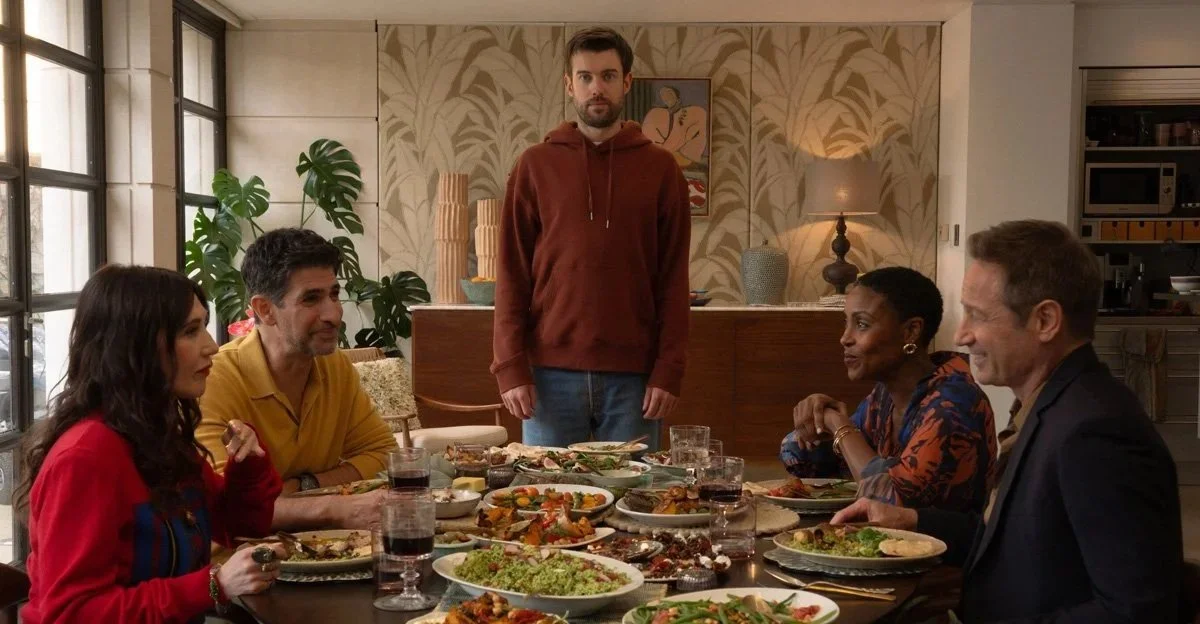
That series was swiftly followed on the same platform by Malice, which has a similar cast of characters (right down to the Black female best friend), plus Jack Whitehall as the mega-rich family’s tutor-slash-psycho-killer. Jack jumps the class divide in pursuit of his prey and this time it’s the venture capitalist head of the household, played by David Duchovny, who meets a sticky end.

Then there’s All Her Fault. Marissa and Peter Irvine are, respectively, a wealth manager and a commodities trader. Cue lots of glossy drone shots of downtown Chicago skyscrapers and suburban gated communities. When their son goes missing, it’s the nanny who dunnit. 

And spare a thought for Julianne Moore’s “socialite and raptor conservationist” in Netflix’s dark comedy Sirens, who floats about breathlessly for five episodes but is ultimately usurped by her social-climbing PA. 

Sirens: Hydrangea danger

How did we get here? Why are we all binging these shows? 

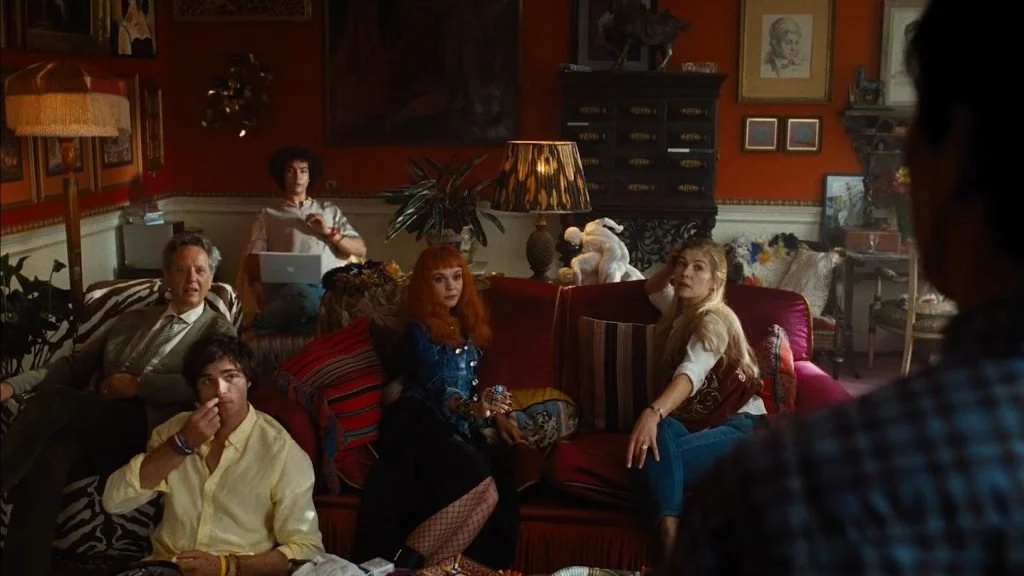
Perhaps the recent spate of series was kick-started by 2023’s Saltburn. Despite receiving mixed reviews, it became one of the most talked-about films of 2024. A collection of viral scenes and a hit soundtrack helped, but the template of infiltrating and destroying the uber-wealthy – this time, the British landed gentry – was established as a gleefully winning formula.

Whether we’re following class warriors Barry Keoghan’s Oliver in Saltburn or Olivia Cooke’s Cherry in The Girlfriend, we become voyeurs not just of the lifestyles of the rich and the famous but – like rubberneckers on the road – of their slow and painful demise. This is no longer the wealth porn of Succession and White Lotus – we’re now in eat the rich territory and it’s the have-nots holding the knife and fork.

Saltburn: Pleased to eat - I mean meet - you

Is it because the rich folk deserve it and we want to see the tables turned? Well sure, sometimes they’re not nice people and justice is served.

But are so many of these shows also being made now because studio heads are tapping into a sense of injustice and impotence in These Tough Economic Times™? The wealth gap has grown steadily wider. In 2010, the total wealth held by the US’s richest 1% was $17 trillion. Fast forward to 2025 and – largely thanks to a rise in the value of their property and shares – that had ballooned to almost $55 trillion. If we put this in individual terms, it’s an increase of $26 million per household. That buys a couple of holiday villas, a small yacht and leaves you with change for a handful of staff.

For most of the people streaming these shows, things also changed in those 15 years. The bottom 50% of US households saw their collective wealth grow significantly from $0.3 to $4.35 trillion. But that’s only an increase of $57,000 per household. Given high levels of debt, low asset ownership, and the soaring costs of everything from healthcare to food to fuel, it amounts to not much more than the cost of a Prime or Netflix subscription.

Malice: No more seats at this table

So the average viewer can never attain the megayachts and mansions, but those who already have them have seen their wealth grow effortlessly. At the same time, people in the 50% bucket are recoiling at the cost of eggs, watering down baby formula and putting off dental, home and car repairs they can’t afford.    

It shouldn’t be a surprise that so many people are watching these shows from under their heated blankets (which are considerably cheaper than turning the heating on). We can enjoy the glossy lifestyles from our sofas, and then we can enjoy watching them be destroyed piece by piece, taken down by a hero who – psychotic and murderous tendencies aside – is just so identifiable. 

For people on the wrong side of the widening wealth gap, the anger is understandable. But the effect of these shows isn't to incite rebellion but contain it, offering a safe, shiny, fictional release for rage that has nowhere else to go. This catharsis asks nothing of us once the screen goes dark.

The three best lyrical rhyme bombs of all time

Ever hear a song lyric and do an audio double take? Something that’s unexpected, a little bit weird and just incredibly satisfying in the way it beautifully rhymes.

I’m calling them rhyme bombs. Here are my top three and the stories behind the songs:

Rhyme bomber 1: Mariah Carey
Song: Touch My Body
Released: February 2008, Island Records

Mariah is well-known for her songwriting prowess. And she doesn’t just churn out any old lyrics either; her use of literary devices in hit pop songs has been documented in a quite sublime Twitter thread. It’s a mash-up of all things high- and low-brow, literati meets pop royalty, and includes examples of Mariah’s penchant for juxtaposition, which is at the core of 2008’s Touch My Body. 

The lead single from Maz’s eleventh studio album E=MC2, this track is quite the unholy lattice of simpering seduction interspersed with all-out threats against infringing on her privacy.

I’m just going to a toga party, respect my privacy

On the one hand, she promises to “hug your body tighter than my favourite jeans” (and who wouldn’t want that), but in the next breath she warns: “I best not catch this flick on YouTube.” Presumably if that happened, she’d be squeezing the oxygen out of you like a boa constrictor in 501s.

In the third verse she lobs in this casual, effortless five-syllable rhyme bomb: 

“'Cause if you run your mouth and brag about this secret rendezvous

I will hunt you down

'Cause they be all up in my business like a Wendy interview

But this is private, between you and I”

Note: The “Wendy” in question is Wendy Williams, host of the eponymous talk show. Five months before Touch My Body was released, Wendy did interview Mariah and asked the somewhat pointed question, “To be as creative as you are, you’ve got to have yourself as the centre of the universe. Is that true?” Mariah’s response: “You’ve gotta give out what you wanna get back.” Mic drop.

Rhyme bomber 2: Carly Simon
Song: You’re So Vain
Released: November 1972, Elektra Records

Rewinding 36 years from Mariah’s confidentiality threats takes us to 1972, the year Carly Simon released You’re So Vain. The track reached number one in multiple countries and is ranked by many as one of the greatest songs of all time. Not surprising, as it includes two top-drawer rhyme moments including the wonderful opening lines of the third verse:

Well I hear you went up to Saratoga

And your horse naturally won

Then you flew your Learjet up to Nova Scotia

To see the total eclipse of the sun

But it’s the stunning triple rhyme bomb in the very first verse, ending in the absolutely wild “gavotte,” that marks out this song as something special. Gavotte, as you well know, is a moderate tempo French folk dance created by the Gavot people of the Pays de Gap region in the 1690s:

You walked into the party like you were walking onto a yacht

Your hat strategically dipped below one eye

Your scarf it was apricot

You had one eye in the mirror, as you watched yourself gavotte

As for how “gavotte” made its way into the lyrics, Simon revealed in 2012 that she had the chorus of the song nailed and written down, but it took over a year for the verses to come together. She saw the now-mythical egomaniac arrive at a party at her sister’s house and check himself out in the mirror while someone remarked: “He looks like he’s walking onto a yacht.”

How to walk into a party, step 1

Of course, this was more than two decades pre-Google so Simon couldn’t surreptitiously look up “what rhymes with yacht” on her phone, but she does fess up: “It rhymed with what I needed it to rhyme with. He’s gavotting because that’s what a pretentious, vain man would do. But he’s not at the French court, he’s at my sister’s house.”

Note: The identity of the self-obsessed lothario who is the subject of Simon’s smackdown has been much debated. She even teasingly released one-letter clues over the years so we know their name includes E, A and R.

In 2015 she confirmed that the second verse was about Warren Beatty - and witheringly noted that he thinks the entire song is about him (how vain indeed) - but she left the door open on who exactly is at the party watching themselves do the folk dance shuffle through one eye.


Rhyme bomber 3: Lauryn Hill
Song: Ex-Factor
Released: December 1998, Ruffle House Records

Fast forward 26 years to 1998. This was the year of B*Witched, Boyzone and Cher’s Believe, which hogged number one for seven weeks, shifted 1.8m copies and introduced a new generation to auto-tune. 

But it wasn’t all cheesy pop and uplifting comeback anthems that year. Lauryn Hill of Fugees fame released Ex-Factor, the second single from her debut solo album, The Miseducation of Lauryn Hill. In it she laments the state of her relationship, searching for meaning and questioning herself, radiating pain, longing and frustration. In lyrics that some saw as directed at former Fugees member Wyclef Jean, she asks:

Tell me who I have to be (who I have to be)

To get some reciprocity

See, no one loves you more than me (more than me)

And no one ever will (no one ever will, yeah)

Ress-ip-ross-itee

“Am I not enough for you to love me back?” she asks in a chorus that has resonated with millions. No one has a greater love than Lauryn and no one has before or since rhyme bombed “reciprocity” to such devastating effect - and no one ever will.